Burgenland is Austria's southernmost region, where warm sunshine and the famous Lake Neusiedl create a unique atmosphere. Its location is extremely convenient, as Vienna is just an hour's train ride away. Its proximity to the capital makes life here particularly attractive – many residents take advantage of its work and cultural opportunities while enjoying the peace and quiet of their region.
The region is characterized by a relaxed pace, clean air, and well-maintained landscapes. It boasts numerous vineyards and thermal spas, and housing prices in Burgenland are significantly lower than in Vienna or Salzburg. The quality of life, however, is in no way inferior to more expensive regions of the country.
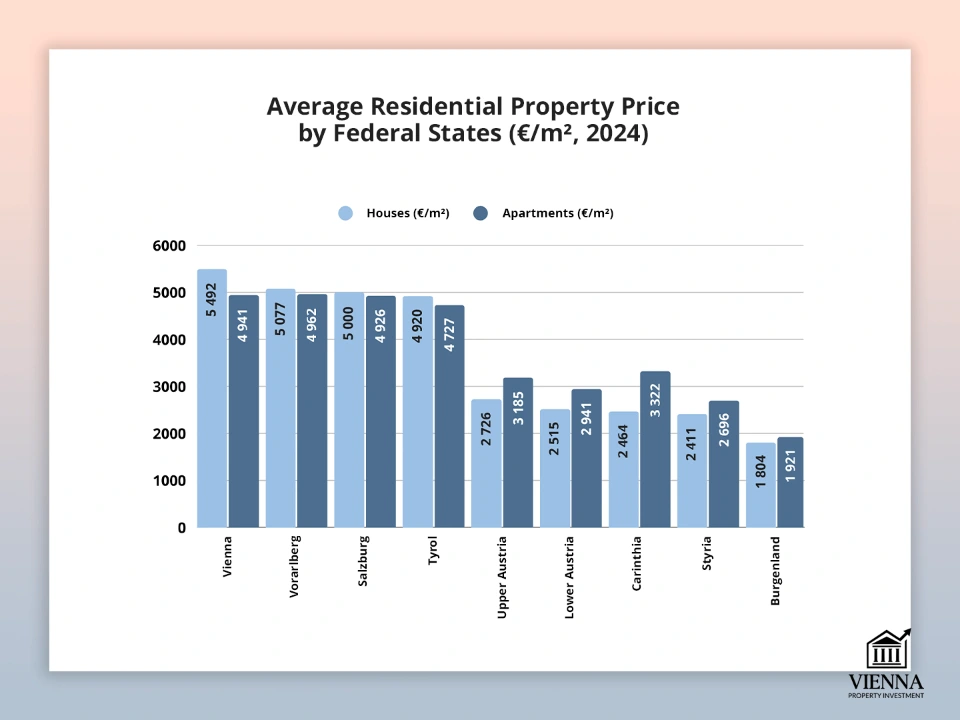
Statistically, real estate in Burgenland is much more affordable. For example, houses here cost an average of €1,804/m², compared to €5,492/m² in Vienna. The situation with apartments is similar: approximately €1,921/m² in Burgenland versus €4,941/m² in the capital. For a more complete picture, real estate in Linz , as an indicator of prices in a major city outside the Vienna metropolitan area. Building land in Burgenland is the cheapest in Austria: approximately €70/m² on average. By comparison, prices in the Alpine regions are significantly higher, making this region a particularly advantageous option.
Interestingly, local residents' income levels are quite high, and the price decline since 2022 has been minimal – just 2.6%. As a result, buying real estate is less of a burden than in other regions. All this makes Burgenland attractive for both relocation and investment: expenses are lower, and the quality of life is comparable to other federal states.
Buyers are often attracted by the combination of affordability and active recreation. There are lower taxes, more sunny days, and, thanks to its proximity to Vienna, access to city services is maintained. It's no wonder the region itself is often called "the sunny heart of Austria.".
The Burgenland real estate market today
Currently, the bulk of transactions are for country houses and apartments, as well as cottages and farmland. In 2022, prices rose nationwide, but in Burgenland, the decline in 2023 was milder than in other regions. And in 2025, the market will revive again, making now a good time to find an attractive offer.
Types of real estate to buy

Houses. These are the most in-demand properties, ranging from small cottages to spacious villas. In 2022, almost a third of all transactions (27%) were for houses. The average price is approximately €2,517 per square meter, meaning a 100 square meter house will cost approximately €250,000–300,000.
Apartments. These are primarily found in large cities (such as Eisenstadt) and in new residential complexes near the lake. The average price is €2,040/m², but much depends on the location. In Neusiedl or Eisenstadt, prices can reach €2,700–3,000/m², while in rural areas, they're just over €1,500/m².
Villas and luxury homes. They are concentrated in lakeside areas in the south, such as Terraskirchen or Beuscheit. These properties are purchased by wealthy Austrians and Europeans, often families or elderly couples dreaming of a home by the water. Villa prices vary greatly: from €500,000 for a good option to several million for premium mansions.
Land plots. They're less common in cities and villages, but they're still available. The average price is around €110/m², but in Eisenstadt or Neusiedl am See it can rise to €300–330/m². Prices for agricultural land are quite different – sometimes as low as €20–50/m², but such plots are often unsuitable for residential development.
-
Important point! It's also worth considering the government's plans: after the pandemic, restrictions are being discussed to prevent excessive land speculation. (We'll be following the novelle Raumplanungsgesetz .)
Features: availability and assortment
Burgenland, home to approximately 300,000 people, remains sparsely populated. However, it has the highest number of houses per capita among Austrian states. This is due to the active construction of cottages and townhouses.
Old houses can be purchased here at reasonable prices, and new projects are appearing regularly. Local companies and public housing associations, such as OSG, are actively engaged in construction. Most new buildings are being built in the lakeside region and in the suburbs of Vienna.

Prices and cost trends
While prices in Austria as a whole rose from 2019 to 2022, starting in 2023 the market entered a stabilization phase, and in some federal states a price decline was even recorded.
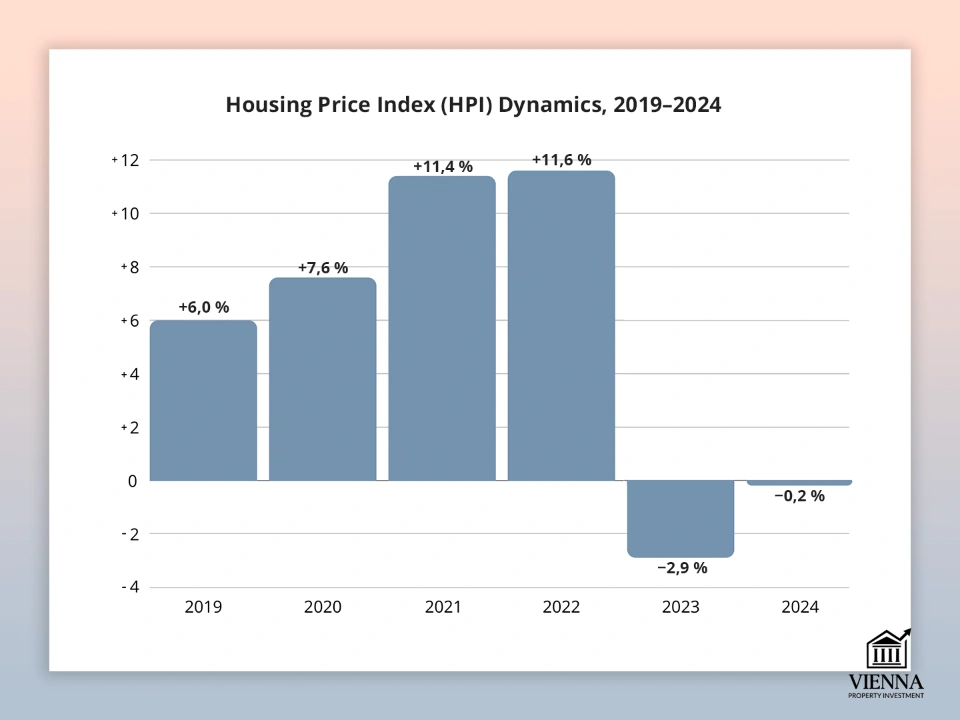
Burgenland stands out against this backdrop: the price decline here was minimal. For example, while the national average in 2023 was -2.6%, in Burgenland, real estate lost only 2.6% of its value, meaning it remained virtually unchanged.
The situation with apartments is different: the base price remains low, and they showed a slight increase in 2024. Moreover, in the first half of 2025, house prices in Burgenland increased by 0.3% year-on-year – in contrast to previous years, when they declined.
The reasons for this dynamic are clear: prices here are initially lower than the Austrian average, while family incomes, conversely, are higher. For example, purchasing a home in the region is often comparable to a family's income for five to eight years, which is considered very affordable.
Furthermore, proximity to Vienna plays a key role: many buyers work in the capital but prefer to live in the quieter and more accessible Burgenland.
Where is housing cheaper?
- The northern parts of the region, near the Hungarian border, remain the most affordable. In Jennersdorf, prices are around €2,227/m², and in Oberwart, €2,260/m².
- The southern states, including the Neusiedl am See area, on the other hand, are characterized by higher prices.
This is important to consider: for those who aren't dependent on a specific place of work, northern areas are more advantageous. For buyers seeking a combination of good infrastructure and a prestigious setting, mid-level plus areas north of the lake are suitable.
Areas with the highest demand

Today, three key clusters of interest stand out in Burgenland:
Eisenstadt and the surrounding area. This area is often called the capital of winemaking. It has a well-developed infrastructure, including schools, a university, and good roads. Prices are higher than the regional average, but it remains popular with families and investors.
The lakeside region (Neusiedl am See and Rust). Real estate here is prized for its prestige and recreational opportunities. Lakeside properties are often purchased as second homes. Locals and foreigners alike choose this area for its resort lifestyle, developed infrastructure, marinas, and thermal spas.
Northeastern Burgenland (Mattersburg, Neusiedl). Its proximity to the Vienna metropolitan area makes this cluster particularly attractive for those who want to work in the capital but live in a quieter suburb. Demand for townhouses and small family homes is rapidly growing here.
The most sought-after segment of the Burgenland real estate market is well-appointed homes priced under €400,000 and high-quality apartments in Eisenstadt and Neusiedl. Meanwhile, the decline in new construction has increased buyer interest in existing homes.
-
Case study: A young entrepreneur from Hungary sought advice on purchasing a plot of land in northern Burgenland. As an EU citizen, he did not require a special permit for the transaction. Ultimately, he purchased the plot in Zillertal County for €50 per square meter and began building a house for his family.
How a foreigner can buy property in Burgenland
The acquisition of real estate by foreigners is regulated by a special law. It's important to consider the buyer's category.
EU/EEA citizens. Purchasing property or land does not require separate permits. The application process is identical to that for Austrian citizens.
Third-country nationals. For them, the situation is more complex: a permit is required. The buyer submits an application to the land commission (Grundverkehrsbehörde) of the district where the property is located.
-
to learn more about the restrictions on foreigners purchasing real estate in Austria , the documents required, and the typical approval process.
Conditions for issuing a permit. The transaction must meet the country's interests—social, economic, or cultural. Security is also a consideration, so the police are sometimes involved.
There are no exemptions from these rules in Burgenland: according to the Burgenland Act , all foreigners are required to obtain official approval. The application is submitted to the district administration, and the process can take up to two to three months.
Typical difficulties. The list of documents is quite extensive, and without experience, it's easy to make mistakes. Therefore, lawyers advise contacting a notary at an early stage. In some cases, the procedure is simplified, for example, when marrying an Austrian citizen, but the general rules remain strict.
Rules and restrictions for foreign buyers

Prohibitions and quotas. There are no formal quotas, but authorities can deny a transaction if its purpose is not in the interests of the region. For example, if you want to purchase land in Burgenland for resale, the transaction is unlikely to be approved.
Types of real estate. Particularly strict requirements apply to agricultural land, which is often impossible for foreigners to purchase. Residential property is simpler: simply justify the purpose of the purchase—permanent residence or investment.
Regional peculiarities. Burgenland offers no special benefits for foreigners in this regard. Unlike some cities (Graz, Vienna), there are no automatic exemptions. By law, all buyers (except EU citizens) must obtain consent to purchase real estate in Burgenland.
A notary not only drafts the contract and oversees the transaction, but also verifies the property itself: its legal history, any encumbrances, or debts. A purchase here is impossible without a notary, as they are the ones who submit the documents to the Land Transfer Office.
Necessary documents and legal aspects of the transaction
Property preparation. A land registry check is always performed before a transaction. It's important to ensure that the property rights are properly registered and that the land registry contains no mortgages, leases, or other restrictions. An extract (Grundbuchsauszug) can be obtained online or through the court registry.
Notarial certification. At the contract signing stage, the notary verifies the buyer's bona fides (including the absence of tax arrears) and the property's compliance with local urban development plans. All key terms—price, payment terms, and warranties—are included in the contract. The notary then submits the documents to the land commission (if approval is required) and registers the new ownership in the land register.
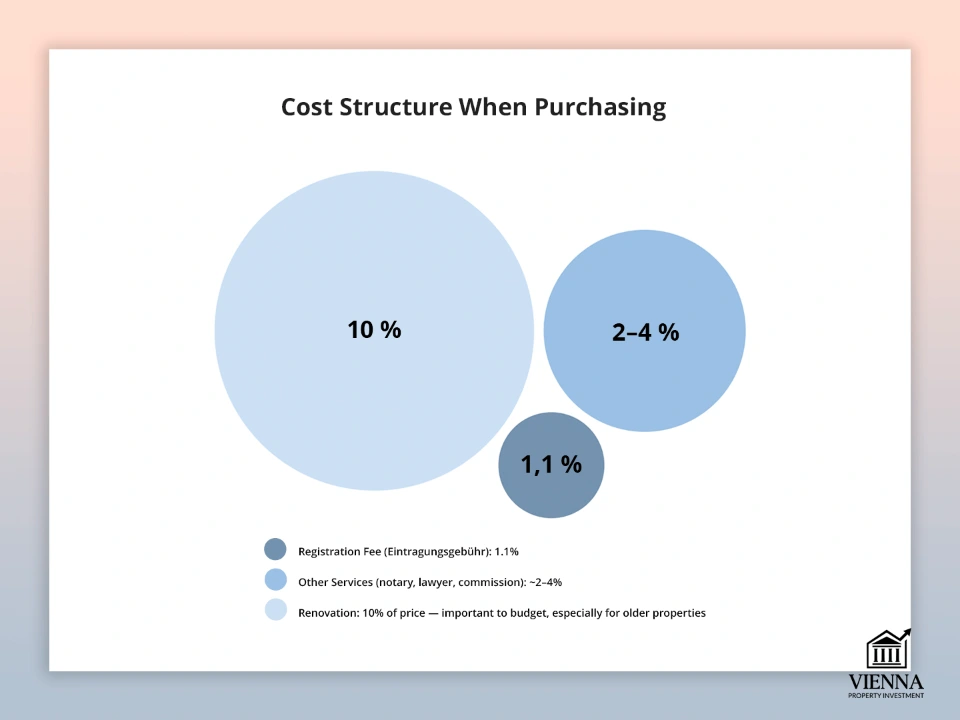
Taxes and fees. As in the rest of Austria, buyers pay a real estate acquisition tax (Grunderwerbsteuer) of 3.5% of the property's value and a title deed fee of approximately 1.1%. Burgenland also imposes a land appreciation tax (Speculationssteuer), but it is levied only on quick resale and does not affect those purchasing a home for personal use.
Cadastral registration. All land parcels in the region are recorded in the local cadastral register. Registration of a new transaction typically takes two to four weeks. If the parcel's shape changes, additional boundary surveying (Vermessung) will be required.
Where to find help with purchasing
Realtors. Large agencies (Raiffeisen Immobilien, Engel & Völkers, Remax, and others) operate in Burgenland. Many of them specialize in working with foreigners and are well-versed in obtaining permits. It's best to contact licensed brokers with a proven track record.
Legal consultants. A lawyer with experience in international law will help you navigate the nuances of the law. It's helpful if the specialist speaks English or Russian to avoid misunderstandings when drafting documents.
Consulting centers. In large cities, such as Eisenstadt or Neusiedl, there are government information services. They sometimes hold seminars for those planning to invest in the region. Vienna Property Investment – many clients start with a toll-free call.
How to choose the right type of property

Before purchasing, it's important to determine your purpose: will it be a permanent residence, a vacation home, or an investment? Burgenland offers a variety of options, each suited to specific needs.
Permanent residence in Burgenland
Houses. They are most often chosen by families with children. A house allows you to customize the space, have pets, and plant a garden. Houses are especially popular in towns such as Spitalkamer, Neusiedl, and Eisenstadt, where schools, shops, and medical facilities are located.
Apartments. Cities like Eisenstadt and Oberpulendorf offer many modern residential complexes. Apartments are convenient for young couples and seniors, as they're easier to maintain. A possible downside is the lack of private land.
Infrastructure. When choosing a property, it's always worth considering the availability of transportation (train or bus to Vienna), schools (including those with German and Hungarian language groups), and nearby employment opportunities (wineries, factories, agritourism). The areas with the best infrastructure are Eisenstadt, Neusiedl am See, and Mattersburg.
-
A real-life case: a family from Moscow was looking for a cottage near Lake Neusiedl. The main criteria were proximity to an international school and the ability to reach Vienna within an hour. The solution was a new home in Neudörfl, just 20 km from Eisenstadt. Here, the family found a comfortable balance between their children's education, infrastructure, and nature.
Second home and holiday villa

Burgenland attracts not only families but also those seeking a vacation home. Picturesque landscapes, wine tours, and thermal spas (Stegersbach, Lutzmannsburg) make the region popular among Austrians and foreigners.
Popular destinations. The southern part of the region around Lake Neusiedl—the towns of Neusiedl, Rust, and Breitenbrunn—is particularly popular. Luxury cottages and spacious family homes are being built here, making them popular summer and weekend getaways. The lake is also a favorite among retirees who want to spend more time here.
Villas and apartments. Properties for sale in Burgenland include apartments in wine-themed hotel complexes, as well as private villas with private plots. Prices for these properties start at €500,000. Many homes are designed for multiple families and include swimming pools, saunas, and spacious terraces.
Features. When purchasing a country house, it's important to consider the season. In winter, heating and maintenance costs can be significant. Therefore, some owners rent out their homes in their spare time to offset these costs. More information is available in the rental section.
Land plots for development

Purchasing land in Burgenland is considered a long-term investment. Plots of land can be found here for a variety of purposes: for private homes, commercial projects (usually on the outskirts of cities), and agricultural use.
Residential land. Land for residential development is sold by both private owners and special funds. Often, such plots already have existing infrastructure, such as a paved road, water, and electricity. Prices vary greatly: from approximately €40 per square meter in remote towns (such as Jennersdorf) to €300 per square meter in prestigious areas near Eisenstadt. It's important to always check the permitted building type: the local plan determines the specific type of building and the number of floors allowed.
Potential. Land remains one of the most liquid assets when purchased wisely. For example, a plot of land in the Neusiedl am See area can appreciate significantly in value within 5-10 years, especially with the development of roads or social infrastructure. However, in rural areas, complications may arise: converting agricultural land to residential development sometimes requires additional approval.
Restrictions and development plans. Burgenland authorities are seeking to regulate the land market to prevent speculation: the idea of pegging land prices to average prices over the past five years is being discussed. At the same time, incentives for "green building" : the installation of solar panels is often required when constructing commercial properties. This, in turn, affects the timeframe and final cost of the project.
Conclusion: Purchasing land for construction in Burgenland often involves extensive formalities and utility connection costs. However, in exchange, the buyer gains complete freedom in choosing the layout.
Real estate prices in Burgenland and favorable areas
In this section, we'll look at current prices for different types of housing and compare popular areas to understand where buying will make the most sense.
Overview of prices by type and area
By object type:
- Houses. In 2023, the average price of a bare single-family home in a good area was approximately €280,000 (approximately €2,700/m²).
- Apartments. In provincial towns, a square meter costs around €1,500, while in Eisenstadt or near the lake, it can reach €2,500–3,000/m².
- Land plots. As noted, prices start at approximately €50/m² and reach up to €300/m².
- Villas. In the luxury segment, prices vary widely – from half a million to several million euros.
By region:
- Eisenstadt district (Eisenstadt-Umgebung). The most expensive area, with home prices here ranging from €3,000–€4,000 per square meter.
- Northern Burgenland (Mattersburg, Neusiedl) and the southern lakeside area. Average price range: €2,000 to €2,500/m².
- Southern counties (Oberpulendorf, Giesing, Jennersdorf). The most affordable offers are often less than €2,200/m².
| District (Bezirk) | Property type | Price (€/m²) |
|---|---|---|
| Eisenstadt | House | ~4 061 |
| Oberpulendorf | House | ~2 049 |
| Jennersdorf | House | ~2 227 |
| Neusiedl am See (centre) | Apartment | ~2,761 (the most expensive apartment) |
| Giesing | Apartment/House | ~1 372–2 134 |
| Burgenland (middle) | House | ~2 517 |
Comparison with Vienna. Even in the most expensive areas of Burgenland, prices are significantly lower – approximately half – compared to Vienna's suburbs, such as Neuedlau-Umgebung or Wiener Neustadt. This means that buying a small house in Burgenland can be cheaper than renting in the Viennese suburbs.
How to evaluate the profitability of a purchase
Maintenance costs. In Austria, land and house taxes are relatively low – approximately 0.2% of the cadastral value per year. The main expenses are related to utilities: heating, hot water, electricity, and municipal fees.
Also, gas is slightly cheaper in Hungary than in Austria. However, if a house in Burgenland is used year-round, electric heating may be necessary. Therefore, it's worth calculating energy costs in advance.
Taxes on sale. If you sell a property less than 10 years after purchase, you'll be subject to a 25% speculation gains tax. This is the general rule throughout Austria. After ten years of ownership, the tax is waived. Mortgages are typically issued for 10-15 years, so this factor is worth considering.
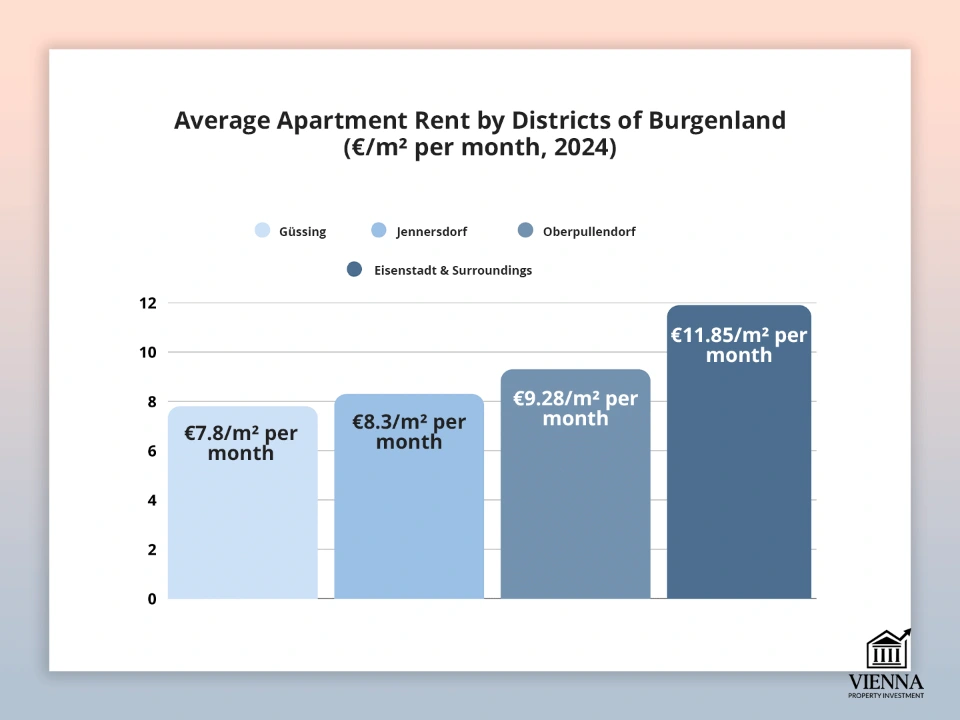
Rental income. When renting out a home, you can expect to earn €1,500–€2,000 per month, depending on the location and amenities. On average, such an investment pays for itself in 20–25 years, taking all expenses into account.
Price growth prospects. Real estate values in Burgenland depend on the region's development. New roads, factories, or social facilities (such as the planned clinic in Gols) can boost the market. At the same time, initiatives like the "Entsiegelungsprämie" and price caps can prevent prices from skyrocketing. Therefore, when purchasing, it's important to consider how the region will develop over the next 5-10 years. If new schools, tourism projects, or industry are planned, property values will increase over time.
The latest in legislation and regulations
In Austria, the process of purchasing real estate is strictly regulated, and significant changes have been made in this area in recent years.
Rules for foreigners. From 2023 to 2025, federal authorities implemented digital solutions to simplify the process. Several federal states, including Burgenland, have launched online portals for submitting purchase applications. This makes the process more convenient and faster. However, the basic rule remains the same: foreigners must justify the purchase and obtain permission. A simplified procedure for EU citizens is being discussed, but for now, the previous rules apply in Burgenland.
Benefits and new taxes. Subsidies have been introduced for installing solar panels and modernizing existing homes. Those building from scratch can qualify for preferential loans, with rates starting at 0.9% per annum for energy-efficient housing.
At the same time, the introduction of a tax on vacant properties is being considered. The goal is to encourage owners to rent out their properties rather than keep them empty.
Consequences of the pandemic. The coronavirus has had a significant impact on the market: demand for housing outside of cities has skyrocketed. In 2020, apartment prices rose by almost 26%, while house prices increased by approximately 9%.
Today, the situation has gradually stabilized, but the conclusion is clear: high-quality housing with space and green areas is not declining in price, as remote work has become the new norm for many.
Infrastructure projects. Burgenland is actively developing its region. In the south, a new clinic is being built in Gols (the Green Hospital project), which will create jobs and attract new residents.
At the same time, wine and tourism industries are expanding: thermal spas are being modernized, and guesthouses are being developed. Additionally, authorities are preparing a land protection law to limit overdevelopment and preserve natural resources.
Practical advice for buying property in Burgenland

Buying a house or apartment is a big decision. Preparing in advance will help avoid mistakes and simplify the process.
How to prepare for purchase
Calculate your budget. It's important to consider not only the property price but also any associated expenses: registration tax, realtor commission (approximately 3%), and notary fees.
Choosing an agent. It's best to work with a local specialist who understands Burgenland. For example, Vienna Property Investment helps find properties that aren't often listed in open databases. Since Burgenland's real estate market is relatively small, it's important to trust a professional.
Visit the property. Online photos are no substitute for an in-person visit. Only on-site can you assess the neighbors, transportation, and construction quality. When inspecting the house, pay attention to the roof, pipes, walls, foundation, and insulation. In winter (temperatures often drop to 0–5°C), poor insulation can be a serious drawback.
Legal due diligence. Before making a significant down payment, ensure the property is legally sound. Request an extract from the land register (Grundbuch) and review the urban development plan (Flächenwidmungsplan, Bebauungsplan) . This will protect you from unpleasant surprises, such as purchasing a plot of land that is not suitable for residential construction.
What pitfalls might you encounter?
Incomplete property description. Portals often publish limited information. Check the square footage (are balconies and non-residential spaces included) and the technical condition. The older the building, the more carefully the utilities need to be checked.
Permits for foreigners. If you're not an EU citizen, the approval process can take time. Sometimes sellers aren't willing to wait, so check the timeframe in advance and, if necessary, secure the property with a small deposit.
Hidden costs. In Austria, land registration, insurance, and a number of mandatory fees are additionally charged. Check with your realtor to see which of these are included in the price and which will need to be paid separately.
Language barrier. All official documents are prepared in German. If you don't speak it, hire a translator. Vienna Property Investment, for example, has Russian-speaking consultants who assist clients at every stage of the transaction.
Transaction support

Purchasing in Austria is divided into several stages:
- Preliminary contract (Kaufsanbot). The buyer and seller sign an agreement on price and terms. A deposit of approximately 10% of the purchase price is typically required.
- Obtaining a permit. For foreigners, the notary submits the documents to the Land Transfer Office. Approval takes 1–3 months. After this, the contract becomes valid.
- Main contract and registration. At this stage, the final contract is signed before a notary, and the remaining payments and taxes are paid. The notary then registers the new owner in the land registry. This moment is called "verbücherung" (transaction), and it signifies the official completion of the transaction.
- After the transaction. Insurance must be obtained and new utility contracts (water, electricity) must be signed. In rural areas, it is also necessary to notify the municipality or water utility about the change of ownership.
Organize everything step by step. A realtor and lawyer typically work together: the agent helps with the search and negotiation, and the notary is responsible for the official documents. It's important to not be shy about asking questions—this is your investment and your protection.
Additional options - rent and lease
The rental potential of properties in Burgenland is quite high, especially for new developments. These properties typically find tenants quickly, as many investors immediately transfer them to rental management agencies.
- The region is in demand among renters of all types. In Eisenstadt, where the university is located, student housing is in high demand. Tourism also plays a significant role.
- In the Neusiedl region, properties are almost always occupied, as holidaymakers come here both in summer and winter.
- Apartments in Eisenstadt are consistently occupied by families and working residents, making this market particularly reliable for owners.
Short-term vs. long-term. Tourist properties located near lakes or thermal spas are ideal for short-term rentals. Legally, rentals are permitted for up to 180 days per year, but registration and payment of a tourist tax are mandatory.
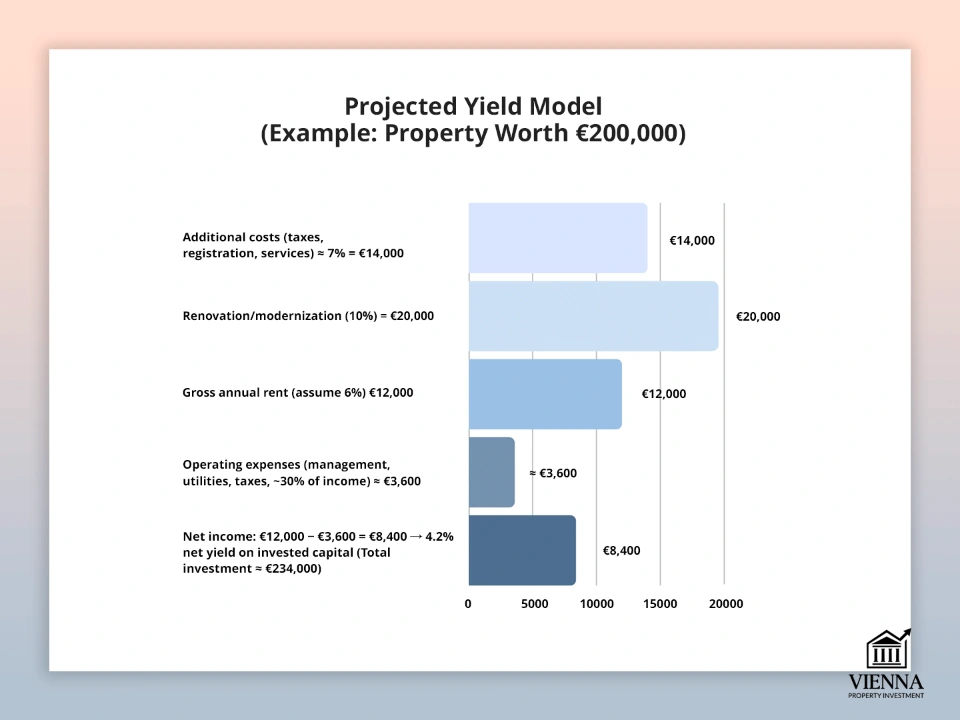
If you plan to rent long-term—for a year or more—it's important to formalize a Mietvertrag (rental agreement). Tenants must also be registered. Failure to comply with these rules may result in problems with the police.
Legislation for owners. Income from renting out a home is subject to taxation. The rate is up to 25% after deducting eligible expenses.
Moreover, Burgenland has no restrictions similar to the "Mietpreisbremse" (rental price) in Vienna. This means rents are set freely, depending on the quality of the property and the market situation. This is a definite advantage for landlords, as they can set a fair price while taking into account the competitive advantages of their property.
Investing in rental property in Burgenland will be more reliable if you pay attention to the surrounding infrastructure (schools, shops, convenient roads).
Conclusion
Burgenland today is an undervalued market with great potential. It combines affordable prices, a high quality of life, and growth prospects.
Demand for housing is stable for both residential and leisure purposes, and new projects (clinics, roads, environmental initiatives) only enhance the region's attractiveness.
When buying a home here, it's best to work with professionals. An experienced realtor and notary will help you choose the right property, complete the transaction from start to finish, and protect you from risks.
By purchasing real estate in Burgenland, you're getting not just a house or apartment, but a new life: clean air, tranquility, winemaking traditions, and a lake nearby. It's not just an investment, but an investment in the comfort and health of your family.