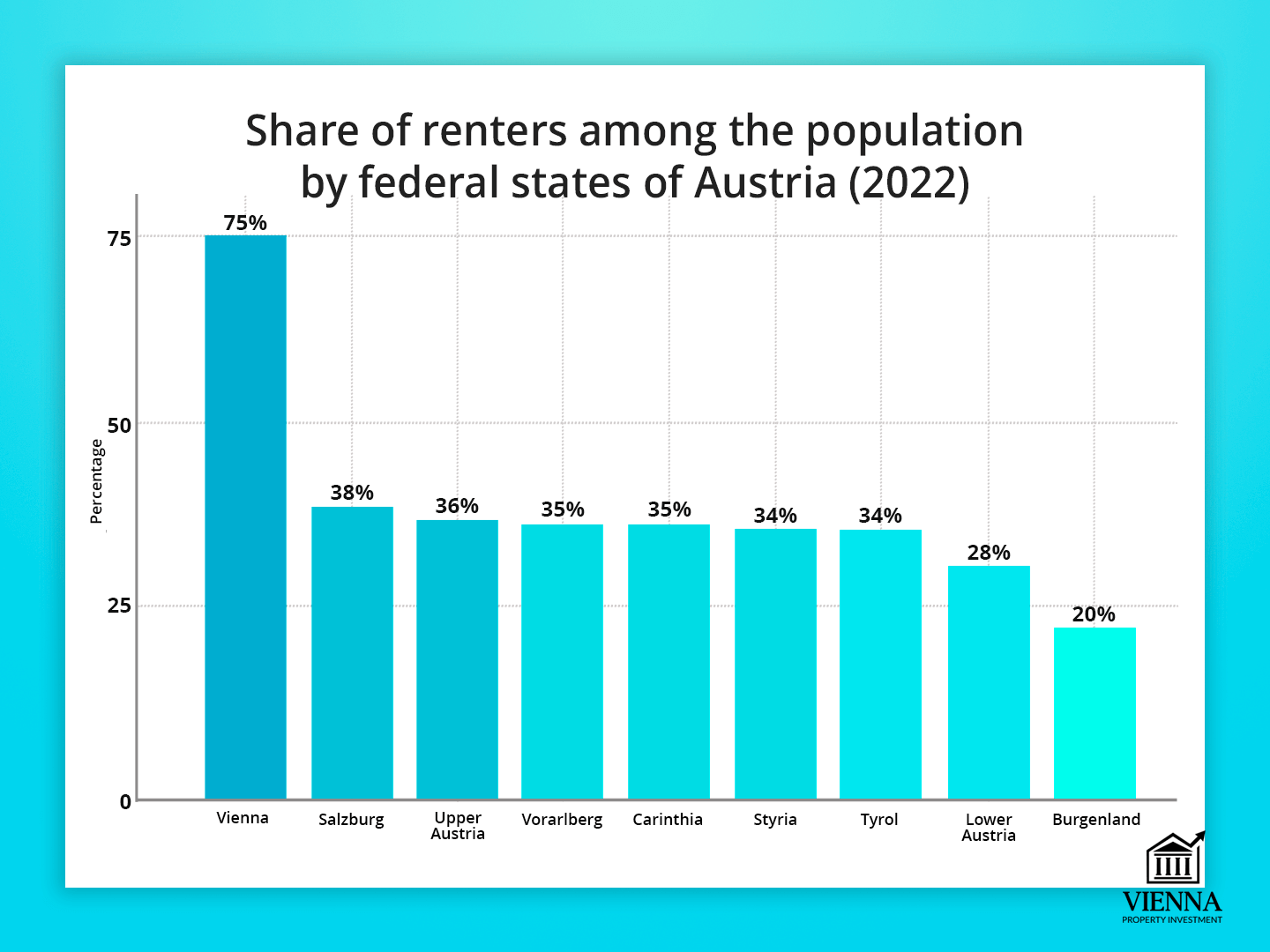
In Vienna, over 75% of residents rent, so understanding the specifics of apartment leases in Austria is important for both those planning to move to the country and investors. If you're planning to move to Austria or looking for housing in Vienna , you need to understand how to draft and execute an apartment lease agreement.
At first glance, the process seems fairly straightforward. Just sign the contract, receive the keys, and move into your new apartment. However, in Austria, renting is governed by clear rules and laws. The way the contract is drawn up can determine not only your comfort but also the safety of your funds.
Why is this important? Because mistakes are costly. For example, an incorrectly specified rental period or rental indexation conditions can lead to unnecessary expenses. If you're a foreigner, your residency status may depend on the rental agreement.
To better understand the nuances, you can download a sample apartment lease agreement in Vienna , prepared by our experts. This Austrian lease agreement template has been tested on hundreds of successful cases.
This article will be useful for anyone planning to rent an apartment in Vienna or other Austrian cities: students, young professionals, families, and, of course, investors who see real estate as a profitable investment.

Types of lease agreements in Austria: which one to choose?
Before signing a contract, it's important to know that tenancy in Austria is regulated by the Residential Tenancy Act ( Mietrechtsgesetz, MRG ) and the General Civil Code ( ABGB ). This allows tenants to feel protected by law.
There are also several types of lease agreements in Austria. The type you choose will determine the terms of your apartment rental in Austria, including the rent and the possibility of long-term occupancy.
Fixed-term and open-ended contracts
It is worth understanding that there is a clear difference between a fixed-term and an open-ended contract.
Fixed-term lease (usually for 3 years or more). The tenant is protected from sudden price increases. However, terminating such a contract early can be difficult. Only after the first year of the lease does the right to terminate the contract with three months' notice arise.
Perpetual. This option seems ideal. The tenant can stay as long as they want, as long as all terms are met. However, this agreement allows the landlord to change the rent or terminate the contract under certain circumstances .
Lease and sublease
Another important point: you can enter into an agreement directly with the owner of the apartment (rental), or you can rent housing from someone who is renting the apartment themselves (sublease).
- In the first case, your rights are reliably protected by law.
- In the second case, the terms may be less favorable for the tenant. Subletting can be advantageous for students and other people who need short-term rentals. However, it's important to carefully check whether the landlord is actually authorized to rent the property.
Features for foreigners
If you are a foreigner, please be aware that the mere fact that you do not have Austrian citizenship does not limit your right to sign a lease agreement in Vienna and other cities.
However, in reality, landlords often ask for additional documents: proof of income, proof of employment, or even references.
- EU citizens can freely rent an apartment, all they need to do is present their passport or ID
- Foreigners are usually required to have a residence permit – “Rot-Weiß-Rot”-Karte , “EU Blue Card”, Niederlassungsbewilligung, etc. – in order to rent real estate without additional permits.
- Tourists who arrive on short-term visas (up to 90 days) may need to negotiate with the landlord in a special manner to conclude a contract
In general, almost any apartment can be rented to foreigners. Before signing the contract, it's worth clarifying any requirements with the landlord (for example, the owner's consent for family members to move in).
-
A practical example: One client, an IT specialist from Ukraine, was asked not only for standard documents but also for a letter from his employer confirming a long-term contract. Without it, the apartment owner simply refused to sign the contract. After a consultation, we helped him properly prepare the necessary documents. The contract was concluded on favorable terms.
What must be included in a lease agreement?

Those who see a real estate lease agreement in Austria for the first time are often surprised by the number of pages. However, every line of such a contract protects either you or the apartment owner. Below, we've outlined the key points that must be included.
Details of the parties
Please provide the full name and address of both the landlord and tenant. If the apartment is shared equally, all tenants are responsible for paying the rent. Contact information and passport/ID information for both parties are required.
Description of housing and basic rules
- The address of the apartment, floor, area and list of property that the tenant can use.
- What rooms and common areas can the tenant use (e.g. parking, storage room, attic, garden, laundry room, etc.).
- Record the current condition of the property. It's important to describe all issues discovered during the inspection. If there are obvious defects (windows, plumbing, signs of moisture), it's best to immediately clarify who will organize the repairs in Vienna and at whose expense.
I always insist that clients document even minor chips and scratches upon moving in. Having this notation in the apartment's acceptance certificate will protect you from any landlord claims upon moving out.
Rent and utilities
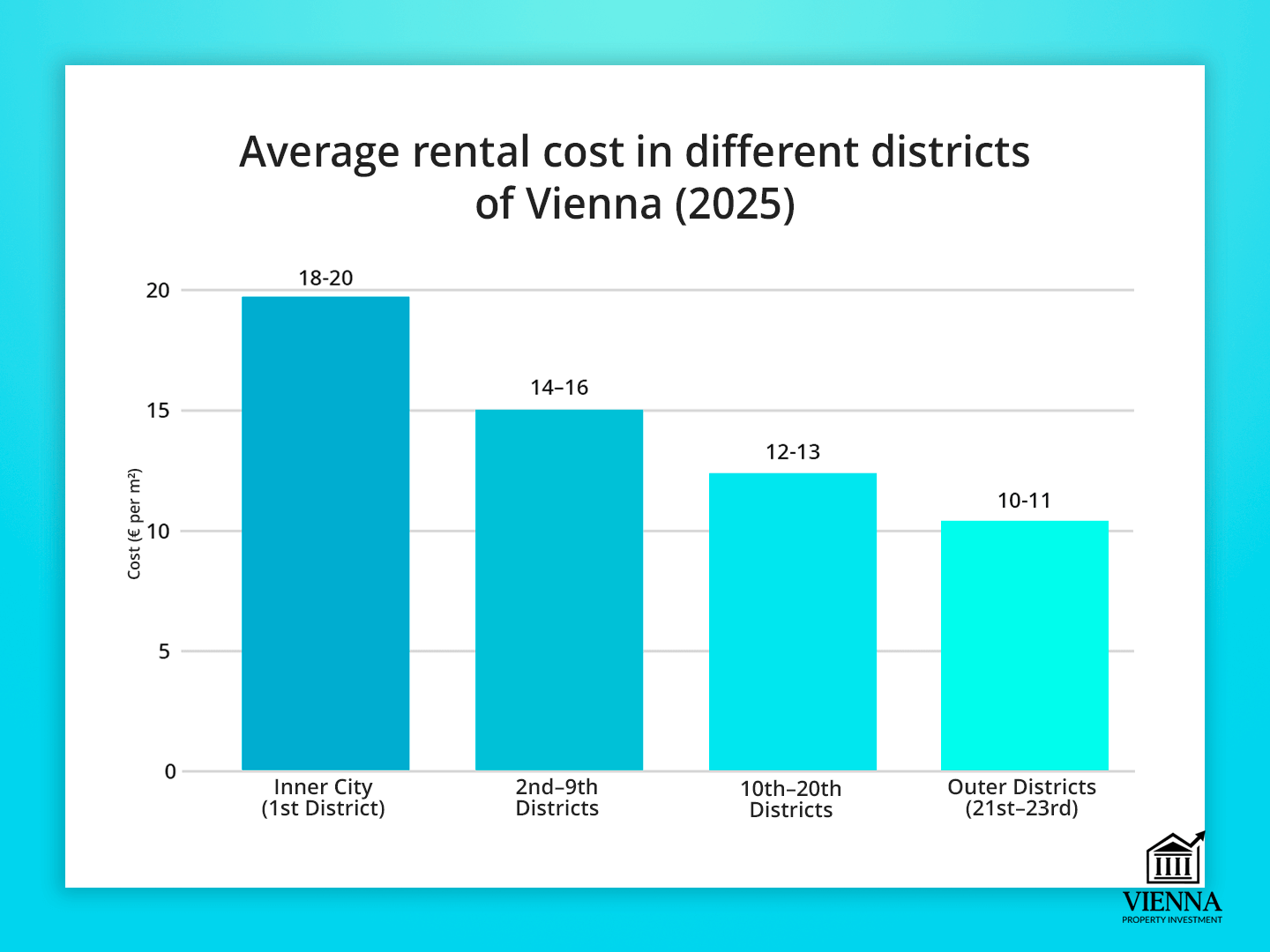
- Clearly state the amount of the basic (gross) and, if necessary, the basic (net) rent payment and what is included in it.
- Check whether the tenant pays separately for electricity, gas, heating, internet, and other expenses.
- Please indicate the payment method and terms (usually bank transfer once a month).
- If the contract falls under the MRG, agree on whether the fee can be indexed (for example, according to inflation) and specify how the recalculation will be carried out.
- According to Austrian law, landlords can demand increased rents that are slightly higher than the base rent per square meter (Richtwert/Kategoriemiete). From 2024–2025, the maximum rent increase is 5% per year.
-
Important: While the amount may seem small, utilities can add 30–40% to the rent. So always check what's included.
Caution
The deposit amount is usually equal to 2-3 months' rent (the legal maximum is up to 6 months).
- Write down the exact amount and details of the account to which the payment should be transferred.
- Specify the terms for returning the deposit (after moving in and checking for damage) and interest (deposits can be kept in a special account and earn a small interest for the tenant).
- Be sure to take a receipt for the deposit payment.
I always advise clients to take photos of the apartment on the day they move in. It's a small thing, but these photos often help them get their deposit back without a dispute.
Rights and responsibilities
- Specify the tenant's responsibilities (for example, maintaining cleanliness, paying for minor repairs and services).
- Describe the rights of the landlord (to check technical condition, to conduct inspections).
- Subletting an apartment without consent is generally prohibited, as is keeping aggressive animals, making noise at night, etc.
- If a particular point is important to you (for example, you plan to get a pet or do some renovations), reflect this in the contract.
- If the landlord takes on any obligations (for example, future repairs), set a deadline for completion.
Rules of conduct
Apartment buildings often have rules that outline the hours after which silence must be observed, what to do with trash, where smoking and walking pets are permitted, and so on. If such rules exist, ask for them to be included in an addendum to your Austrian apartment rental agreement.
Also, specify in the contract who is allowed to carry out repairs (cosmetic or major) and under what conditions.
Duration of the contract
- Specify the period for which the agreement is concluded (start and end dates, or mark “indefinite”).
- A limited-term lease must include a clause allowing for early eviction ("Aussteigsklausel"). For example: "The tenant has the right to terminate the lease after one year with one month's notice." If this clause is omitted, by law this right only becomes available after one year, subject to three months' notice to the landlord.
- The contract should also include a clause regarding automatic renewal or new negotiations after the end of the term.
- If the contract formally expires, it is often legally extended for another three years.
-
Key points of the agreement:
- Full name and address of the tenant and landlord;
- Address and description of the property, list of assets;
- The exact rent amount, transfer of utility bills;
- Payment procedure (date, method);
- Amount of deposit (Kaution) and rules for its return;
- Tenant/landlord responsibilities (repairs, taxes, incidentals);
- Additional conditions (pets, smoking, parking);
- Lease term (fixed/unlimited) and termination rules;
- The fact of transfer of the apartment and its condition upon moving in (preferably an acceptance certificate).
When drafting contracts, it's helpful to use templates and examples . These samples will be helpful when translating from German and checking key points.
-
Tip: If the contract is in a foreign language, get an official translation and bring it with you to the meeting to avoid misunderstandings.
Step-by-step instructions: how to draw up a lease agreement in Austria

If you're renting in Austria for the first time, signing a lease can seem quite complicated. To make it easier, follow these guidelines:
Step 1. Inspect the apartment before signing. On the day of the inspection, capture any minor defects with a camera or phone. Draw up an "acceptance report" (Übergabeprotokoll) and include a list of the damages and their description.
I always insist that clients document even minor chips and scratches upon moving in. This forethought will protect them from landlord claims upon moving out.
Based on the report, it can be confirmed that the damage was there initially, and you will not have to pay for its repair.
Step 2. Carefully review the contract. Read every clause before signing. Misunderstandings of terms often lead to disputes. Clarify any unclear terms, preferably in writing (by email), and keep the correspondence.
Don't rely solely on verbal promises. Demand that all terms and conditions (for example, repair deadlines or additional services) be specified in the contract.
Step 3. Check the parties to the contract. Make sure you are dealing with the property owner or their authorized representative:
- If you are renting directly from the landlord, ask to see the title deeds (Grundbuchauszug – extract from the real estate register).
- If you're renting an apartment through an agency, check the license and commission information. Since July 1, 2023, the "Bestellerprinzip" (Bestellerprinzip) principle has been in effect: the first person to hire a realtor pays their commission. Typically, the landlord hires the agent and pays the commission, but it's important to check this first.
Step 4. Draft the agreement properly. In Austria, notarization of a lease agreement is not required. It is sufficient for both parties to sign and date the agreement. The presence of a lawyer or notary is not required by law.
However, to be on the safe side, many consult a lawyer. They can verify whether the contract contains any inaccuracies that could be misinterpreted or clauses that cannot be legally added.
In special cases (for example, if you're an investor or a large company), this is precisely what makes sense. If you're negotiating through an agency, make sure all agreements between the agent and the landlord are reflected in the contract.
-
A real-life case: A family from Kazakhstan had a contract that stipulated that the landlord could increase the rent "in the event of an increase in market rates." At first glance, this requirement seemed logical. However, a lawyer explained that this wording was too vague and could be used against the tenant. After the amendment, this clause was rewritten, and the family saved hundreds of euros.

Step 5. Payment and documents upon signing. When signing the contract, a deposit (usually by bank transfer) and the first month's payment are often paid immediately. Obtain receipts for all transactions.
If possible, obtain scans of the landlord's ID and apartment ownership document from the landlord (or their representative). If you're negotiating through an agent rather than directly, check the contract for any mention of a commission – with Bestellerprinzip, the tenant doesn't need to pay one.
Step 6. Register your official place of residence and change your address. After entering Austria, foreigners must register their place of residence (Meldung) at the local town hall at their new address. To register, you will need a "Meldezettel" (a special residence form) signed by the landlord and your passport/ID card.
Be sure to do this within three business days, otherwise you risk fines (up to €726 under the Administrative Code). Keep the document issued after registration. You will need it to open a bank account, obtain insurance, and obtain certificates.
Step 7. Keep copies of everything. Keep all pages of the contract and appendices. It's especially important to keep the pages that specify the termination terms, deposit amount, and utility bills. If possible, have a copy of the contract certified by a lawyer or notary to ensure the document is legally binding.
What documents are required to rent an apartment in Vienna?

Signing a lease in Austria without preparing the necessary documents is impossible. Landlords want to be sure they're signing with a reliable tenant, so they strictly verify documents.
The landlord (renting out the apartment) will need the following documents:
- A title deed to the apartment (extract from the land register – Grundbuchauszug). This confirms your right to rent out the property.
- Energy efficiency. In Austria (as in other EU countries), an energy certificate (Heizkostenpass/Energieausweis) is often required. It provides information on heating costs.
- A certificate of occupancy. If you're renting out your apartment through an agent, negotiate a contract with the agent (Maklervertrag). If the apartment is owned by multiple owners, it's best to have a notarized consent from each.
- Building documents. Sometimes, owners need to provide copies of the minutes of the HOA general meeting (Eigentümerversammlung) to demonstrate that they have no outstanding debts. Consent from the owners of other apartments may also be required.
- Utility contracts. If the tenant will be using any services (e.g., internet, cable TV, or a parking space on the leased property), prepare copies of the contracts with the providers and services to provide to the tenant.

For the tenant (apartment renter):
- Passport or ID card. You must provide a valid ID. It is recommended to make copies of the main pages.
- Proof of income. For example, you may be required to provide information on your accrued salary for the last two or three months, a bank statement, or an employment contract. These documents confirm your solvency. Tax returns are sometimes accepted (for self-employed individuals).
- Tenant questionnaire (Mieterselbstauskunft). This is a standard form that includes personal information, employment details, previous residence, etc. A landlord may request it to assess the tenant's reliability. It is not required by law, but is common in practice.
- Residence registration (Meldezettel). This document confirms your right to reside in the apartment or house. You'll receive the Meldezettel form in the mail and then submit it to the municipal authorities. Without registration, the landlord may fine you, and you won't be able to pay for health insurance, open a bank account, etc.
- Residence permit or visa (for residents of countries outside the EU). If you are from a third country, you must provide a valid residence permit or long-term visa. If you arrived in the country on a short-term visa, check with your landlord if they are willing to rent the apartment to you for a short period. This will help avoid misunderstandings. It's also a good idea to use a proven apartment lease agreement template for foreigners in Austria.
- A certificate of no criminal record. Some landlords request this certificate to ensure the tenant's credibility. While this isn't a legal requirement, landlords can privately request any documents they wish.

Additional documents:
- References or a previous lease. If you've lived in Austria before, you may need a letter of recommendation from your previous landlord or a copy of your previous lease.
- Bank details. Opening an account with an Austrian bank will simplify the process of concluding a lease agreement. It will also allow you to make commission-free payments and direct transfers. In some cases, you may be required to make a deposit into a special account (Kautionskonto).
- Translation of documents. If you don't speak German, translate your passport and contract in advance and show them to your landlord.
Once you've collected the documents, you should be fully prepared to sign them. It's best to keep copies of the documents and payment receipts.
-
A real-life case: A family from Russia encountered a situation where their apartment owner required proof of income earned in Austria, even though they had just moved there. The solution was simple: we obtained a letter of guarantee from the husband's employer, who worked for an international company in Vienna. This helped them sign the contract without any unnecessary delays.
The more complete your documentation, the faster you'll find the perfect apartment. Sometimes, being prepared to provide all the necessary documents upfront can be the deciding factor—especially in Vienna's competitive rental market.
Rental terms: what else is important to know?
Even after the contract is signed and you've received the keys, it's too early to relax. Renting in Austria has its own unique features that you need to be aware of in advance.
Minimum term and early termination. Most often, the minimum lease term is three years. However, after the first year, the tenant has the right to terminate the contract with three months' notice. This is stipulated in the Mietrechtsgesetz (Law of Tenancy).
If the property is rented for a short period (for example, six months), this is often associated with subletting. However, these options do not provide long-term protection and are almost always more expensive.
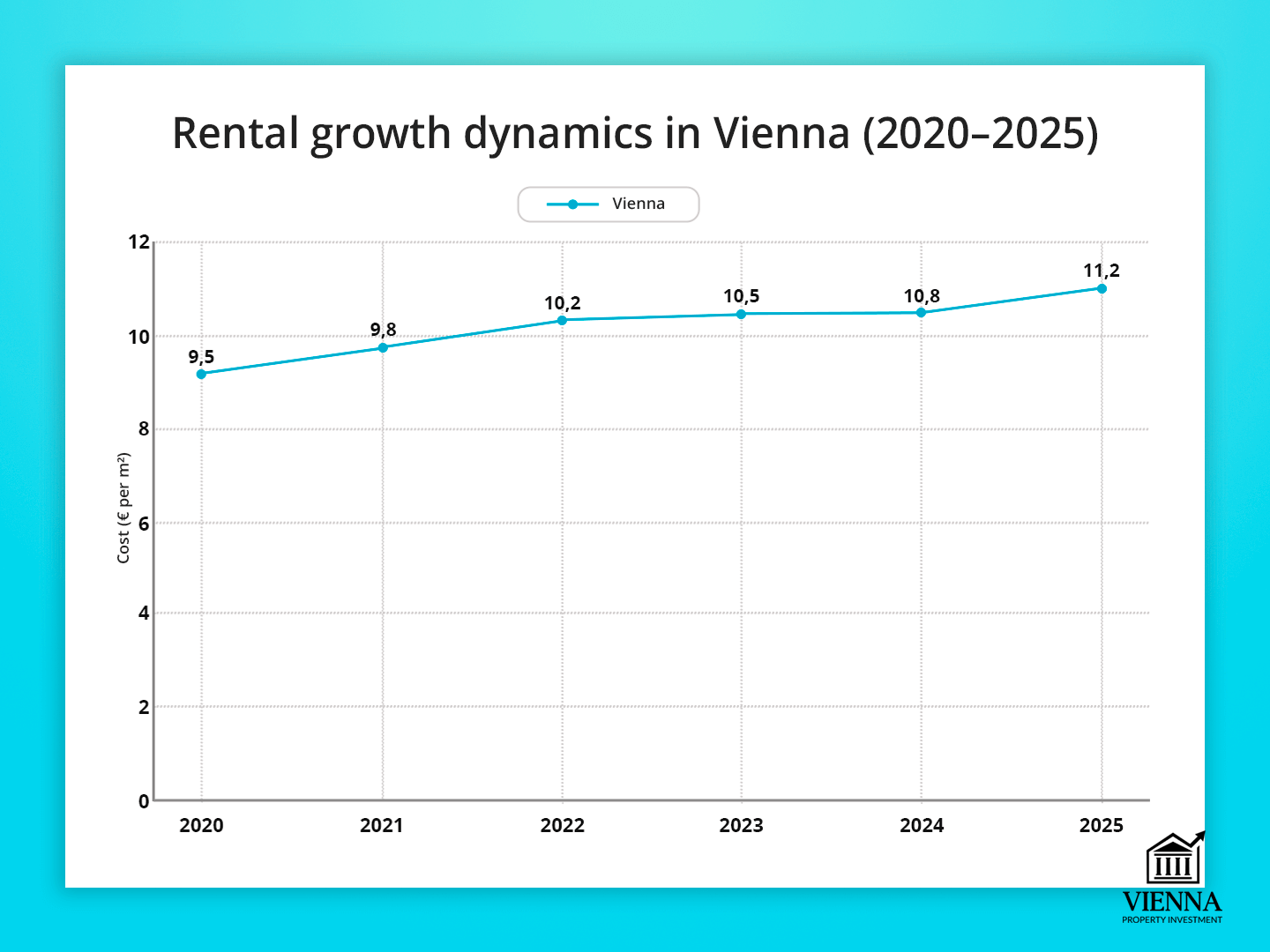
Rent indexation. Lease agreements almost always include a clause regarding indexation, linking rent to the official price index (Verbraucherpreisindex). This means rent may increase annually depending on inflation.
Fines and penalties. If the tenant is late with payments or violates the terms of the lease (for example, by remodeling the space without permission), the contract may stipulate penalties. It's important to read these clauses carefully, as the penalties can sometimes be significant.
Tenant Rights. If the landlord fails to fulfill their obligations (for example, fails to repair a broken boiler or ignores complaints about a leaky roof), the tenant has the right to demand that the deficiencies be corrected or the rent be reduced.
I always advise my clients: don't be afraid to stand up for your rights. Austria has a tenant arbitration system, and sometimes filing a complaint is enough to resolve the issue.
-
Case Study: A client complained that the windows in his rented apartment in Vienna's 3rd district had been leaking for several months. The landlord had been unresponsive. After filing a complaint with the arbitration body at the Chamber of Employment (Schlichtungsstelle), the matter was resolved in the tenant's favor. The landlord not only repaired the windows but also reimbursed part of the rent.
Knowing the lease terms isn't just a formality; it's a way to protect yourself from potential losses. After all, the lease in Austria protects not only the owner but also the tenant.
Practical tips: how to protect yourself when renting

Signing a rental contract in Austria isn't just a formality; it's also a test of your attentiveness. Mistakes at this stage can be costly, so it's helpful to use a few practical tips.
Check the landlord and the property. Before signing the contract, make sure:
- that the landlord actually owns the apartment (this can be verified in the land register - Grundbuch);
- that there are no problems in the apartment that went unnoticed during the initial inspection: leaks, mold, faulty electrical wiring.
-
Case study: A client from Slovakia discovered electrical problems after moving in. The landlord insisted everything was fine, but an inspection revealed otherwise. We helped secure an independent inspection, and the landlord was forced to fix the problem at his own expense.
How to minimize risks:
- Read the entire contract. Even a minor clause about "additional expenses" can mean hundreds of euros per month.
- Record the condition of the apartment. Photographs and the acceptance certificate are your best argument for getting your deposit back.
- Compare market prices. Sometimes landlords overcharge.
What to do in case of conflict. If disputes arise (for example, delays in repairs or refusal to return the deposit), in Vienna you can contact:
- in the Schlichtungsstelle (arbitration commission at the magistrate);
- in the Arbeiterkammer (Chamber of Labor, protects the rights of tenants);
- to court (as a last resort).
The role of real estate agencies. In Austria, rental agreements are often negotiated through agencies. In this case, the tenant pays a commission—usually up to two monthly rents. This is a significant amount, but the agency is responsible for ensuring the transparency of the transaction and can mediate disputes.
Innovations and current changes in rental regulations in Austria
The Austrian rental market is rapidly growing. New regulations will be introduced in 2024–2025, which are important to consider for anyone planning to rent in Vienna.
Changes to the Mietrechtsgesetz. Amendments to the Mietrechtsgesetz (MRG) came into force in January 2024:
- Clearer regulations governing rent indexation. Now, rent is indexed exclusively to the Consumer Price Index (CPI), and landlords are required to notify tenants of rent changes three months in advance.
- Transparency of additional expenses. Utility bills should be listed separately, with no hidden fees.
New requirements for leases. These were adopted to protect tenants from unscrupulous landlords. Leases are now required to include:
- clause on the return of the deposit and terms;
- information about the tenant’s rights if problems are discovered that were not mentioned when concluding the contract;
- indication of the date of the last major overhaul.
Special considerations for foreigners. New recommendations (currently at the parliamentary initiative level) will be discussed in 2025 to simplify the process of concluding lease agreements for foreign professionals. Plans call for a reduction in the list of additional documents that landlords are entitled to require from foreigners.
Impact on the Vienna market:
- For tenants – more transparency and predictability.
- For landlords, there are more formalities, but also less risk of litigation.
- For foreign renters, this is a chance to simplify their housing search.
-
Case study: We recently helped a client from Georgia sign a contract for an apartment in Vienna's 19th district . Previously, landlords required proof of income from abroad, but under new regulations, an employment contract in Vienna and a local bank statement were sufficient. This saved time and allowed her to move into the apartment just a week after signing the contract.
Practical recommendations:
- Always check that the contract complies with current requirements (it is better to ask the landlord to use a new template).
- If the landlord offers an "old version" of the contract, clarify the reasons.
- Keep all written documents related to the lease.
The rental market has become more civilized in recent years, but I always tell my clients: checking the contract is your personal insurance.
Do you need a realtor when renting an apartment in Vienna?
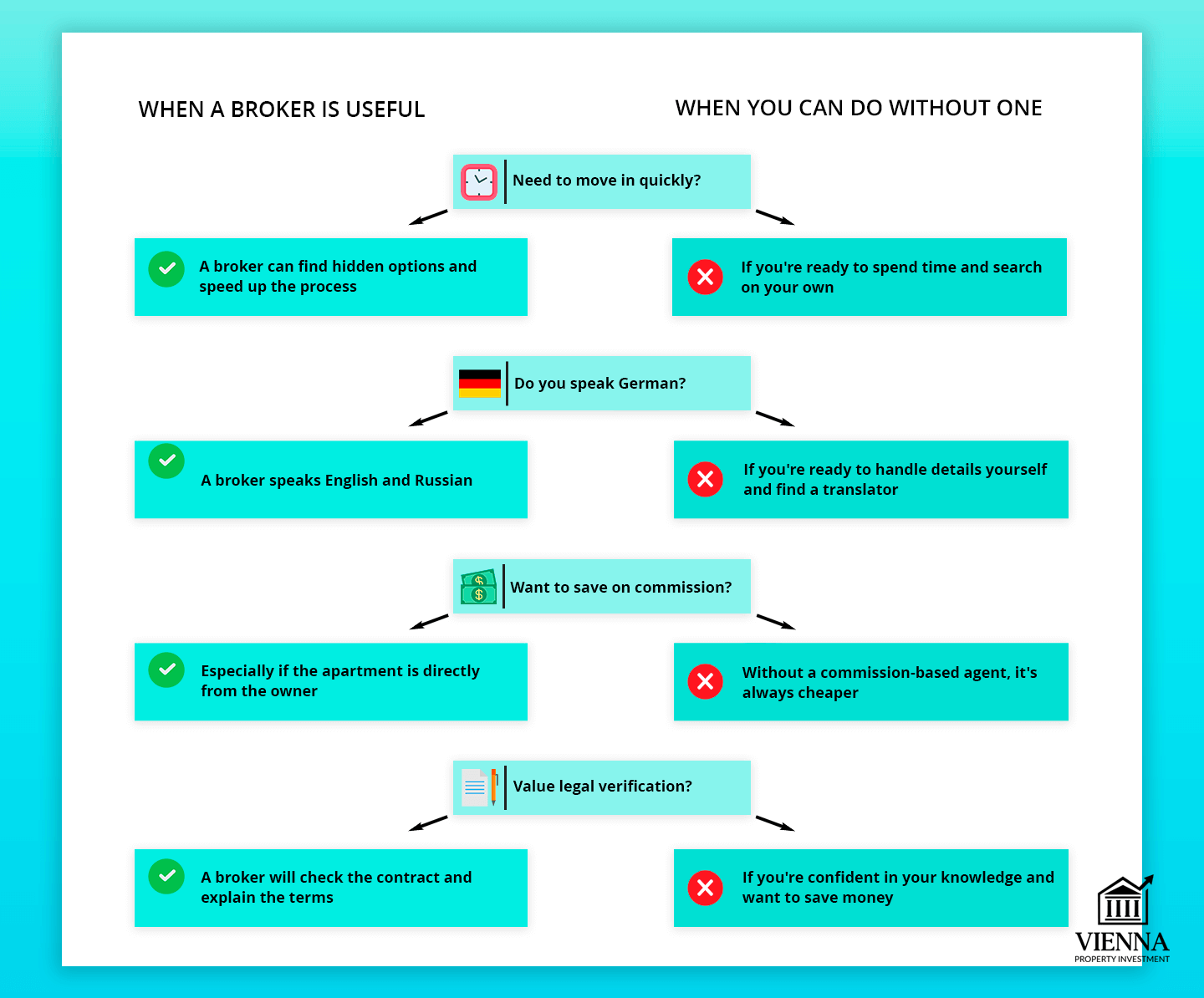
Many people are asking this question, especially when it's increasingly common to hear claims that simply responding to an ad is all it takes to rent an apartment. Let's figure out whether a real estate agent is truly necessary or whether their services are simply a waste of time and money.
Why you can do without an intermediary
Since July 1, 2023, the Bestellerprinzip (client pays) principle has been in effect. This means that if the landlord offers the apartment and they have hired an agent, the tenant pays no commission. This allows tenants to save significantly.
Many apartments are rented directly by owners, with no commission. It's easy to find such listings ("provisionsfrei") online and on social media, marked "no middleman." This saves time and money.
When an agent's help is really helpful
The Vienna real estate market is highly competitive. Good apartments often don't appear on real estate search platforms; they are first shown through trusted agents. A realtor can suggest excellent options that you wouldn't have found without their help.
Legal services and market expertise. Agents are well-versed in pricing, apartment rental terms in Vienna and other cities, and legal nuances. They can help you avoid pitfalls when signing a contract and make the process less stressful.
Save time. If you've recently moved to Austria and aren't sure which neighborhood to choose, an agent will quickly find suitable options.
| Scenario | When a realtor is useful | When you can do without it |
|---|---|---|
| I need to move out of the apartment quickly | An agent will help you find suitable options and speed up the apartment search process | If you are ready to spend time and look for an apartment on your own |
| You don't speak German (or you speak the language fairly well, but you're not sure you understand everything correctly) | Many agents speak English, some also Russian, so they will help you clarify all the details | If you are ready to understand the nuances and look for a translator or know the language well |
| Want to save money on commissions? | You may not need an agent's services, especially if the apartment is rented directly by the owner and you know how to draw up a rental agreement in Austria | It's always cheaper without a realtor's services |
| Appreciate professional services and contract terms verification | A realtor will help you check the contract and clarify the terms | If you are confident in your knowledge and want to save money |
-
My advice: If you're new to Vienna and value your time and peace of mind, it's worth using the services of professionals. This will save you stress and help you find properties not found on classifieds sites. If you've been living in the city for a while, know which real estate platforms to use, and want to save money, you can rent an apartment directly.
Conclusion
Renting an apartment in Vienna requires understanding the intricacies of bureaucratic procedures and the nuances of the real estate market. The lease agreement should clearly outline your rights and responsibilities to ensure your safe and secure stay in the apartment or house. Follow these simple rules:
- Check the landlord and the property documents. Make sure the owner is actually authorized to rent the apartment.
- Read the contract thoroughly. Even minor details you overlook can lead to significant losses.
- Record the condition of the apartment upon moving in. Photo and video evidence will help with the return of the deposit.
- Keep all receipts and correspondence. This will help you protect your interests if problems arise.
- Keep an eye on new regulations. Legislation in Austria is constantly being updated, so rental conditions may change.
Our services:
- Selecting an apartment based on your goals (relocation, work, investment)
- Checking the lease agreement for compliance with the law
- Negotiating with the landlord to take your interests into account
- Consultations on issues related to deposits, early termination, and rent indexation
Finding a place to live in Austria shouldn't be stressful. A professionally prepared contract will guarantee your peace of mind in Vienna.