Vienna is not only the cultural capital of Austria but also one of the most important centers of European interior design trends. The city is unique in its blend of imperial architecture, early 20th-century Art Nouveau, and ultra-modern 21st-century residential complexes.
Here, almost every neighborhood retains its own unique atmosphere: from ancient streets lined with historic mansions to modern districts with skyscrapers and glass penthouses. This is precisely why interior design in Vienna has its own distinctive character: it always balances respect for history with a desire for modern comfort.
Today, more and more apartment and house owners in the Austrian capital are turning to professional design studios. The reason is simple: the city sets a very high standard of living, and homes here must meet these standards. For some clients, this means preserving the spirit of a vintage Viennese apartment with high ceilings and stucco, while for others, it means creating a minimalist space with smart technology and panoramic windows.
Vienna is considered the capital of interior design
When discussing Vienna, it's impossible not to mention its unique architectural heritage. The city's historic center is listed as a UNESCO World Heritage Site, and this directly influences its approach to interior design. Many apartments are located in old buildings—Altbau—and these historic Viennese properties often retain high ceilings, arched windows, herringbone parquet floors, and original doors.
Such spaces present a real challenge for designers: they must find a balance between preserving historical authenticity and implementing modern engineering solutions.

On the other hand, Vienna is experiencing rapid development outside the city center: Donaustadt, Favoriten, Leopoldstadt , and Simmering districts are being filled with modern residential complexes. These apartments demand a completely different approach—functionality, minimalism, open floor plans, and the latest engineering systems.
Therefore, an interior designer in Austria must be equally confident in working with both classic interiors and new buildings, offering clients solutions that will be relevant both today and in 10–15 years.
The cultural context shouldn't be forgotten either. Vienna is a city home to numerous musicians, artists, architects, diplomats, and members of the business elite. For many of them, an apartment isn't just a place to live, but also a reflection of their status and worldview.
Therefore, luxury interior design in Vienna often includes customized solutions: the integration of art objects, antique collections, and designer furniture from Austrian brands.
Interior design studio services in Vienna
Choosing an interior design studio in Vienna is the first step to creating your dream home. Clients typically engage an agency or independent designer to receive a comprehensive solution covering all stages, from concept to final decor.

- Briefing and concept. At this stage, the designer gathers all the client's wishes, studies the apartment or house plan, and identifies key needs. For example, one family may want a spacious open space with a combined kitchen and living room, while another needs several separate bedrooms and offices. In Vienna, this stage is especially important, as many apartments have non-standard layouts due to the historic architecture.
- Visualization. After the concept is approved, the studio creates 3D visualizations of the future interior. This helps the client see the final result in advance. Adjustments can be made to materials, color schemes, and furniture arrangement.
- Working documentation. The designer prepares detailed plans for electrical, plumbing, lighting, floors, and ceilings. For Vienna, this is a key stage, as many older buildings require a special approach: load-bearing walls, restoration regulations, and restrictions on demolition must be taken into account.
- Designer supervision. Even the best project can be ruined if it's improperly implemented. Therefore, the designer often supervises the renovation, checking the compliance of materials and the contractors' work.
- Equipment. At this stage, the studio purchases furniture, lighting, textiles, and decor. In Vienna, it's popular to use local brands such as Wittmann (upholstered furniture) or Lobmeyr (Bohemian glass lamps).
- Turnkey interior. The final stage is a fully finished apartment ready to move into. The apartment will be furnished down to the last detail, from kitchen appliances to art.
Price of interiors
| Service | Price | Who is it suitable for? |
|---|---|---|
| Consultation and selection | €80–150/hour | Owners of small apartments who want to refresh their interior |
| Sketch design | €50–70/m² | Those who are ready to handle the implementation themselves |
| Project with author's supervision | €120–200/m² | Clients who value precision and comfort |
| Elite interior design | from €250/m² | Owners of penthouses and historic mansions |
When it comes to interior design services in Vienna , it's important to understand that the cost isn't limited to drawings or beautiful 3D images. It's a comprehensive service, encompassing planning, material selection, construction supervision, and hundreds of minor yet critical tasks.
In Austria, where everything is strictly regulated by building codes and historical preservation requirements, the role of a professional becomes even more valuable. The average price for interior design services in Vienna from 2023 to 2025 is as follows:
- Consultations and "shopping list." These meetings are typically reserved for those looking to update their interior without a major renovation. The designer compiles a list of furniture, lighting, and textiles that can be purchased to "freshen up" the apartment. Prices range from €80 to €150 per hour.
- A preliminary design. When the client wants to see the layout, color scheme, and material selection, but is willing to handle the rest of the project themselves. This type of design costs an average of €50–70 per square meter.
- A full project with designer supervision. This is the most popular format: the designer creates the entire project, oversees the renovation, and oversees the contractors. Cost: €120–200 per m².
- Elite interior design is a separate category, aimed at premium clients. These projects utilize exclusive materials (such as Italian marble, Austrian oak, designer lamps, and custom-made furniture). Prices start at €250 per square meter and can reach up to €400 per square meter for penthouses with swimming pools or historic villas.
Vienna's top interior design trends

Neoclassicism with Viennese charm. Classicism in Vienna doesn't mean outdated interiors, but a harmonious blend of historical elements (stucco, herringbone parquet, arched windows) with modern amenities. In 2023–2025, neoclassicism will be adapted: less gilding, more calm tones, natural stone, and wood. It is especially popular at Altbau.
Modern minimalism. Minimalism is increasingly being chosen in new buildings and penthouses in Vienna. Light walls, open floor plans, built-in closets, and a lack of unnecessary decor make the apartments maximally functional. This style is ideal for busy professionals and young families.
Scandinavian comfort. Vienna loves Scandinavian design for its light colors, simplicity, and eco-friendliness. This style is especially popular with families with children: natural materials, comfortable furniture, plenty of light, and textiles create a cozy atmosphere.
Viennese loft. Neighborhoods with former industrial buildings, such as Ottakring or parts Favoriten , are becoming home to lofts. Brick walls, concrete ceilings, exposed utility systems, and vintage furniture make these apartments stylish and unique.
Art Deco for the elite. Luxury interior design in Vienna is often inspired by Art Deco: deep colors, noble materials, brass, and marble. This style is favored by owners of penthouses in Innere Stadt or Döbling , where status and theatricality are prized.
Eco-design has been a strong trend in recent years. Wood, stone, glass, linen and cotton textiles, green walls with living plants. This interior reflects the Austrian love of nature and sustainability.
Fusion of old and new. Many interior designers in Vienna practice the "fusion" style—where antique parquet floors are paired with ultra-modern kitchens, and Viennese antique furniture sits alongside Italian sofas. This is a unique characteristic of Vienna: the city itself is a mix of eras, and its interiors reflect this mood.
According to data from Austrian interior design studios for 2024–2025, the most popular searches are minimalism in new buildings and neoclassical style in Altbau . This means that in Vienna, interiors are directly dependent on the type of building, and this is what makes the market unique.
Renovation and design in Vienna: what a client needs to know

When it comes to renovation and design in Vienna , it's important to understand that the process differs from the usual practices in Eastern Europe or even Southern Europe. Austria is a country with strict building codes and a strong focus on preserving historical heritage. Therefore, even a cosmetic renovation in an old building can turn into a full-fledged project requiring dozens of approvals.
Altbau (historic houses)
Apartments in older buildings (especially in Innere Stadt, Währing, and Josefstadtdistricts) often require complex renovations. First, a technical inspection is necessary: old ceilings, electrical systems, and heating systems may be deteriorating.
Secondly, such buildings are subject to strict heritage protection regulations: changing façades, removing windows, or destroying historic stucco is prohibited. Therefore, designers must find a balance between preserving original details and creating a modern level of comfort. Renovations in Altbau buildings are typically 20-40% more expensive than in new buildings, precisely because of the complexity of integrating utilities.
New buildings
Modern residential complexes in Donaustadt, Favoriten , and Leopoldstadt districts allow for the most daring ideas: remodeling, open-plan spaces, and minimalism. However, they have another drawback: the standard finishes from the developer are often too simple.
Therefore, clients commission custom designs to differentiate their apartments from standard solutions. These renovations are typically simpler, but the materials are more expensive: designers use premium finishes, built-in storage systems, and smart home technology.
Penthouses
Luxury apartments and penthouses are a separate category. Here, renovations and design often include custom solutions: saunas, wine rooms, panoramic terraces, and swimming pools. Work can take 12–18 months, as clients expect not just a beautiful interior, but a unique property that emphasizes their status.
Luxury Interior Design: Who Orders It and Why?
The luxury segment occupies a special place. This is where demand for Austria's most expensive apartments —penthouses and historic residences—is generated, where the interior design enhances status, comfort, and marketability. Innere Stadt , Döbling , and Hietzing are most likely to luxury interior design in Vienna . Clients include Austrian entrepreneurs, diplomats, artists, as well as foreign investors from Germany, Switzerland, the UK, and the Gulf states.
For them, an interior is more than just a home. It's an investment in image, status, and comfort. Such projects include the use of expensive materials (marble, brass, rare wood), designer furniture, state-of-the-art smart home systems, and separate wellness areas. The cost of a single luxury project can easily exceed one million euros for finishing and furnishings alone.
Interestingly, many investors use luxury apartments as assets, renting them out or reselling them after 5-10 years. Proper design can increase the apartment's value by 15-25%.
Investing in interior design in Vienna
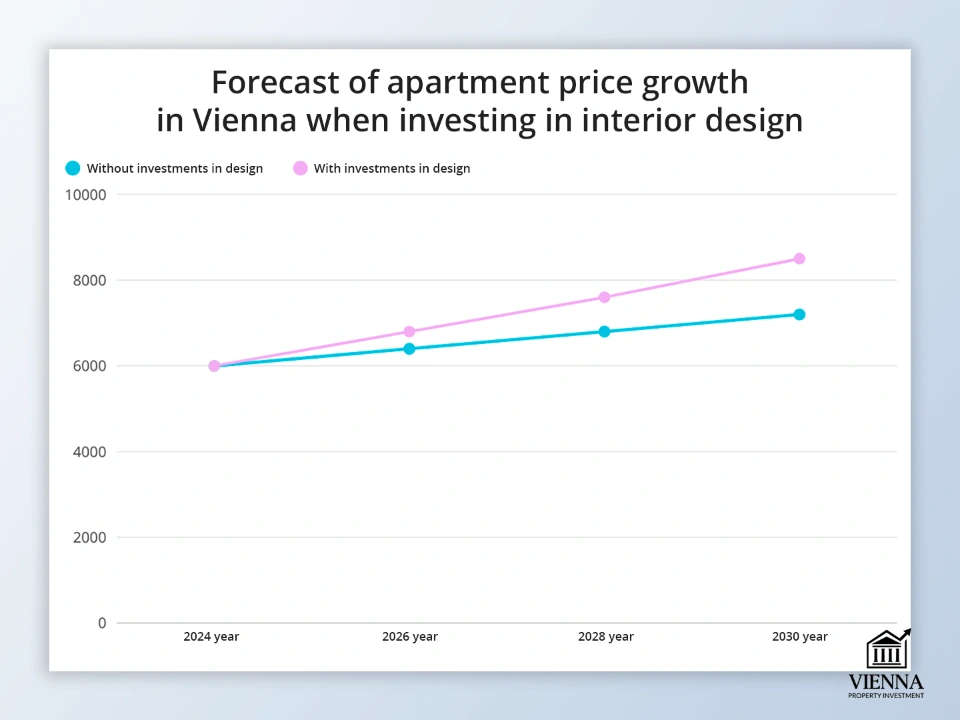
Many foreign buyers, as well as wealthy Austrians, view apartments in Vienna not only as a place to live but also as an investment. In this context, interior design is not an expense but a strategic investment that can increase the property's resale value or make it more attractive for rent.
Why does interior design affect the price of an apartment?
- Increased liquidity. Apartments with well-designed, modern interiors sell faster. In Vienna, the difference between an empty apartment and a turnkey project can be 6-12 months.
- Increased value. According to Austrian realtors, competent design and renovation can increase the price of an apartment by 15–25%. In the luxury segment, this translates to tens and hundreds of thousands of euros.
- Attractiveness for renters. In Vienna, approximately 75% of residents rent, and premium renters are always looking for high-quality, finished interiors. Unfurnished apartments with modern renovations rent for 30-40% less.

Fresh trends in the Vienna interior design market

In recent years, a "green" approach to architecture and interior design has become increasingly popular. Energy-saving systems, air filtration, and even communal rooftop gardens are becoming mandatory in new residential complexes. This is reflected in the choice of interior materials: designers recommend using Austrian oak, recycled glass, and organic linen fabrics. All of this is not only beautiful but also emphasizes the city's environmental culture.
Personal style instead of trends
While clients once commissioned designs that were "just like the neighbors" or "in a Pinterest style," things are changing. Wealthy Viennese increasingly want interiors that reflect their personalities. Art collections, family archives, and vintage furniture are now being incorporated into projects. Designers say clients are asking for interiors that "tell their story.".
Interiors with a "hotel effect"
One of the latest trends is decorating apartments in the style of luxury hotels. This is especially true for penthouses in Innere Stadt and business-class rental apartments. These interiors are built around relaxation areas: large, illuminated bathrooms, soft carpets, and striking marble and wood panels. Residents want to return home as if they were relaxing in a five-star hotel.
Renovation of historic apartments
In the past two years, interest in apartments in 19th-century buildings has surged. Wealthy families are purchasing these properties and commissioning renovations that preserve the original details: stucco ceilings, doors with bronze hardware, and antique parquet floors. But inside, they're integrating everything from smart systems to designer kitchens with islands. This unique format: the spirit of old Vienna on the outside, and the ultimate 21st-century comfort on the inside.
Apartments for investment and rental
Since the pandemic, demand has increased for mid-size apartments (70–100 sq m) that are immediately rented out. Owners are increasingly investing in high-quality interiors: neutral tones, built-in appliances, and practical materials. The reason is simple: these apartments pay for themselves faster because tenants are choosing turnkey properties rather than empty walls.
The New Language of Luxury
While gold, massive furniture, and heavy fabrics were once the symbols of elite design, luxury in Vienna is now understood differently. It's about silence, space, and light . In luxury apartments, the emphasis shifts to acoustic panels, panoramic windows with views of the Danube or the mountains, climate control, and designer lighting. This isn't ostentatious luxury, but rather refined, subtle, and therefore all the more valuable.
The Future of Interior Design

Modern Vienna is increasingly associated not only with classical architecture and historic interiors, but also with cutting-edge technology. Residents and investors want apartments that are not just beautiful, but also as functional and comfortable as possible.
That's why, in recent years, more and more attention has been paid to "smart" solutions that transform homes into high-tech spaces that can adapt to the owner's lifestyle.
Technologies and smart apartments
Vienna has always been considered a city that skillfully combines tradition and innovation. While the façades of Altbau buildings reveal 19th-century history, the interiors increasingly conceal cutting-edge technologies. By 2023–2025, smart home systems will cease to be an option for the wealthy and become the standard for premium projects.
What does a smart apartment in Vienna include today?
- lighting control via sensors and smartphone
- climate control
- security systems
- multimedia: built-in speaker systems
- control of curtains, blinds and windows
- energy-efficient solutions
Vienna's unique feature is that technology is being introduced here not aggressively, but as organically as possible. Even in old apartments with stucco, you can find concealed wiring, seamless ventilation systems, and "invisible" speakers. Designers ensure that technology is unobtrusive, while maintaining a cozy and aesthetically pleasing space.
Forecast: By 2030, experts predict that up to 70% of new apartments in Vienna will be designed with a fully automated system . This applies not only to luxury penthouses but also to business-class apartments. Smart technologies will work in conjunction with urban systems: heating, transportation, and even waste management.
For example, projects are already being discussed where meters will be directly connected to the city's "green networks," and residents will be able to see their environmental footprint in an app.
Biophilic design and health
biophilic design has grown in Vienna . It's not just a trend, but a genuine concern for health and well-being. Designers are actively using natural materials such as oak, stone, wool, and linen. Projects featuring vertical gardens and "green walls" are increasingly common, not only enhancing interiors but also purifying the air.
A distinctive feature of the Vienna market is that the biophilic approach is being woven into even historic apartments. In historic Altbau apartments, designers are integrating winter gardens with panoramic glazing, while in new complexes, they are creating special areas with orangeries and terraces for residents. For families with children, this is a key factor in their choice: they want their children to grow up surrounded by nature, even in the heart of the city.
In the Währing neighborhood, one studio designed a 120-square-meter apartment, transforming a former storage room into a mini greenhouse with an automatic irrigation system and air filtration. This project increased the apartment's value by 18%, and the apartment itself sold within three weeks of hitting the market.
Interiors as investments
Today, interior design in Vienna is not only about beauty but also about investment. According to local agencies, apartments with thoughtful design sell and rent 20–30% faster. Aesthetics are directly linked to financial returns.
In historic districts ( Innere Stadt , Josefstadt , Alsergrund ), apartments in historic buildings are particularly valuable. After renovations that preserve the stucco and parquet floors, such properties can appreciate in value by 15–25% . Penthouses see even higher appreciation, especially if the project was developed with the help of renowned design firms.
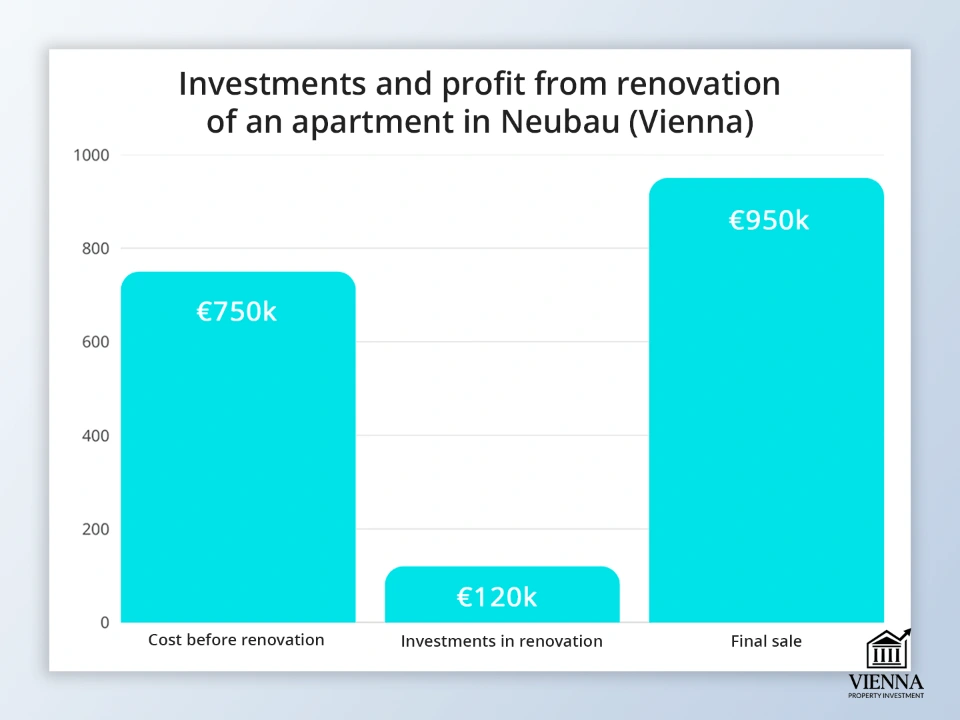
In Neubau a 90 m² apartment without renovations was listed for €750,000 . After a major renovation with a contemporary design, it sold for €950,000 . The interior featured Scandinavian furniture, light walls, and a built-in kitchen with Miele appliances. The renovation investment was €120,000, with a net profit of €80,000.
Demand for turnkey solutions
Over the past three to five years, demand for turnkey . This is because clients don't want to deal with renovations and contractor oversight. They're willing to pay a design studio for the full cycle: from layout and furniture selection to a ready-to-move-in space.
This format is especially appreciated by expats and investors. Many of them purchase apartments remotely and arrive to finished properties. This also works for rentals: apartments with finished interiors rent for at least 20-30% more.
In Leopoldstadt a German investor purchased a 100 m² apartment for €850,000. The studio completed a turnkey renovation for €150,000, including furniture and decor. The apartment is now renting for €4,500 per month, 35% above the average rental price in the area.
Extended examples of projects in Vienna

- Innere Stadt . An apartment in a 19th-century building. The original moldings, doors, and parquet floors have been preserved. Hidden air conditioning systems and a modern, minimalist kitchen have been added. Sold for €3.2 million, a 20% increase over the pre-renovation price.
- Döbling . This 250 m² penthouse features a "quiet luxury" interior with stone, wood, and designer lighting. The renovation cost €1.5 million, and the apartment appreciated by €2 million upon sale. The final profit was €500,000.
- Leopoldstadt . This apartment is available for rent. Neutral tones, built-in wardrobes, and furniture from Austrian manufacturers are featured. Thanks to its design, it rents for 30% more than similar properties without renovation.
- Währing . An apartment in an old building with a conservatory. The designer created a greenhouse with an automatic irrigation system and air filtration. The project cost €80,000 but increased the apartment's value by almost €200,000.
Why Vienna is the interior design capital of the future
Interior design in Vienna today is more than just about style and beauty. It's part of the city's culture, a way to emphasize status, enhance property value, and ensure long-term comfort.
Here, tradition and modernity are seamlessly intertwined: apartments in historic buildings retain their historical charm, but inside, they're filled with 21st-century technology. Key trends in recent years show that Vienna is moving toward conscious and thoughtful design:
- technology and smart apartments make life more convenient and safer;
- Biophilic design creates a feeling of closeness to nature even in the city center;
- Interiors as investments increase the value of housing and bring in additional income;
- international influence shapes the unique style of the capital, where dozens of trends coexist;
- The turnkey format is becoming the new standard for wealthy clients and investors.
For some, design in Vienna is a way of life, for others, a strategic investment, and for still others, a way to emphasize individuality. But one thing is clear to all: the interior design market in the Austrian capital is steadily growing, and the demand for professional design services is only growing.
It's safe to say that by 2030, Vienna will have firmly established itself as one of the most exciting and prestigious interior design centers in Europe. Here, interiors become not just part of the apartment but also part of the city's history.